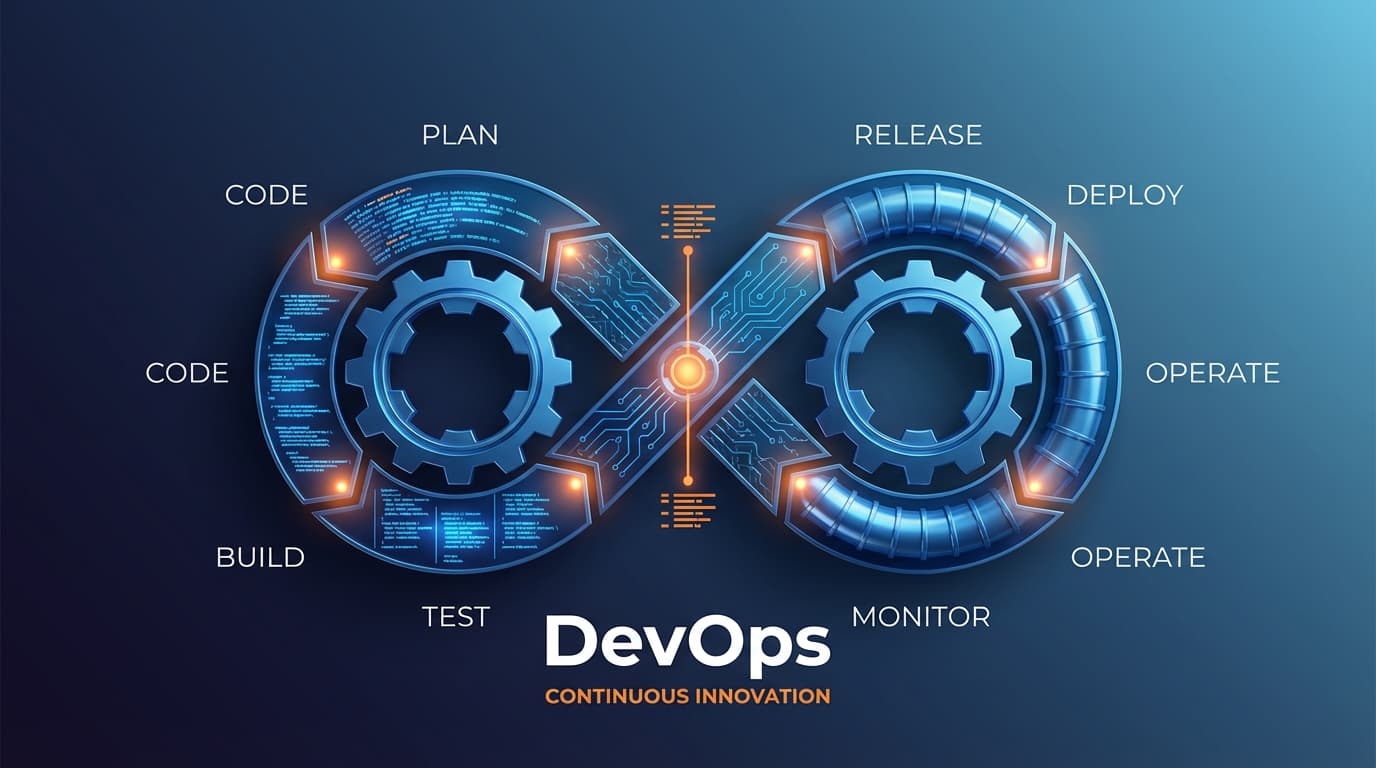
Every organization claims to "do DevOps." But the gap between DevOps theater and genuine engineering excellence keeps widening. High-performing teams deploy hundreds of times per day with near-zero failure rates. Everyone else struggles with weekly releases and weekend firefighting. What's the difference?
The State of DevOps in 2026
After a decade of DevOps adoption, patterns have crystallized. The practices that seemed revolutionary in 2015 are table stakes today. But many organizations have plateaued—implementing the visible practices while missing the underlying principles that make them work.
DevOps isn't a destination. It's a continuous journey of removing friction from the path between idea and production.
Foundation: Everything as Code
High performers treat everything—infrastructure, configuration, policies, documentation—as code. This isn't just about automation; it's about creating a single source of truth that's version-controlled, reviewable, and reproducible.
Infrastructure as Code (IaC)
Using tools like Terraform, Pulumi, or cloud-native solutions, every piece of infrastructure is defined in code. No click-ops, no snowflake servers, no "we think it's configured like this."
- Reproducibility: Spin up identical environments for dev, test, staging, production
- Audit trail: Every change tracked in version control
- Disaster recovery: Rebuild entire environments from code
- Knowledge sharing: Infrastructure decisions documented in code, not tribal knowledge
Configuration as Code
Application configuration, feature flags, secrets management—all managed through code with proper change control. No more "someone changed a config in production and didn't tell anyone."
Policy as Code
Security policies, compliance requirements, and governance rules encoded and automatically enforced. Tools like OPA (Open Policy Agent) make this practical at scale.
CI/CD: Beyond the Basics
Continuous Integration and Continuous Deployment are foundational, but maturity varies enormously. Here's what separates novice from expert implementation:
Pipeline Design
- Fast feedback: Unit tests in seconds, not minutes. Developers shouldn't wait for CI
- Parallel execution: Run independent checks simultaneously
- Progressive validation: Fast checks first, expensive checks later
- Hermetic builds: Builds are reproducible regardless of when or where they run
Deployment Strategies
Beyond basic blue-green deployments, mature organizations use:
- Canary releases: Roll out to a small percentage first, validate, then expand
- Feature flags: Decouple deployment from release—code in production, feature not yet visible
- Progressive delivery: Automated rollout based on metrics and health checks
- Automated rollback: When metrics degrade, automatically revert without human intervention
Observability: The Three Pillars and Beyond
Monitoring tells you something is wrong. Observability helps you understand why. In 2026, the three pillars—logs, metrics, traces—are baseline. High performers go further.
Structured Logging
Not just text files but structured, queryable data. Every log entry includes context: request ID, user, service version, relevant identifiers. Correlation across services is trivial.
Distributed Tracing
Follow requests across service boundaries. When a user reports slowness, trace the entire request path and identify exactly where time was spent.
Metrics and SLOs
Define what "good" looks like with Service Level Objectives. Alert on SLO burn rate, not on arbitrary thresholds. Focus on user-facing impact, not internal metrics.
Proactive Analysis
- Anomaly detection: AI/ML identifying unusual patterns before they become incidents
- Chaos engineering: Deliberately inject failures to verify resilience
- Game days: Practice incident response before real incidents occur
Security Shift-Left: DevSecOps
Security can't be a gate at the end of the pipeline. It must be integrated throughout.
In the Pipeline
- Static analysis (SAST): Scan code for vulnerabilities before merge
- Dependency scanning: Identify vulnerable libraries automatically
- Container scanning: Check images for known vulnerabilities
- Infrastructure scanning: Validate IaC against security policies
In Production
- Runtime protection: Detect and block attacks in real-time
- Secret rotation: Automated, regular credential rotation
- Network policies: Zero-trust networking, minimal required access
- Audit logging: Complete record of who did what, when
Platform Engineering: The Developer Experience
The hottest trend in DevOps isn't a tool—it's an approach. Platform engineering builds internal platforms that make developers more productive while maintaining organizational standards.
What Makes a Good Internal Platform
- Self-service: Developers can provision what they need without tickets
- Golden paths: Opinionated defaults that work well for most cases
- Escape hatches: Flexibility when legitimate needs diverge from defaults
- Documentation: Clear guides for common tasks
- Support model: When things go wrong, help is available
The best platform teams measure success by developer productivity, not by the sophistication of their tools.
Cultural Foundations
Tools and practices matter, but culture determines whether they succeed. High-performing organizations share common cultural traits:
Blameless Postmortems
When incidents occur, focus on systems and processes, not individuals. The goal is learning and improvement, not punishment. People who fear blame hide problems.
Measured Risk-Taking
Deploy frequently because it's safer than big-bang releases. Fail fast, learn fast, improve fast. Organizations that punish failure get hidden failures instead.
Shared Ownership
"You build it, you run it" isn't about burden—it's about feedback loops. Developers who experience production issues write better code.
Continuous Learning
Technology evolves constantly. Organizations that invest in learning stay ahead. Those that don't accumulate skills debt alongside technical debt.
Where DACH Organizations Typically Struggle
In our work with German, Austrian, and Swiss enterprises, we see common patterns:
- Change management overhead: Processes designed for quarterly releases applied to continuous deployment
- Siloed teams: Dev, Ops, Security in separate organizations with misaligned incentives
- Legacy integration: Modern practices stopped at the edge of legacy systems
- Compliance complexity: Regulatory requirements interpreted as barriers to automation
- Tool proliferation: Multiple tools doing similar things, none well integrated
Getting to the Next Level
DevOps maturity isn't about implementing more tools. It's about removing friction, tightening feedback loops, and enabling teams to deliver value safely and quickly.
Start by measuring: How long from code commit to production? How often do deployments fail? How quickly can you recover from incidents? These metrics reveal where to focus improvement efforts.
We help DACH enterprises assess their current DevOps maturity and build practical roadmaps to the next level. Not vendor-driven tool adoption, but capability-focused improvement that delivers measurable results.