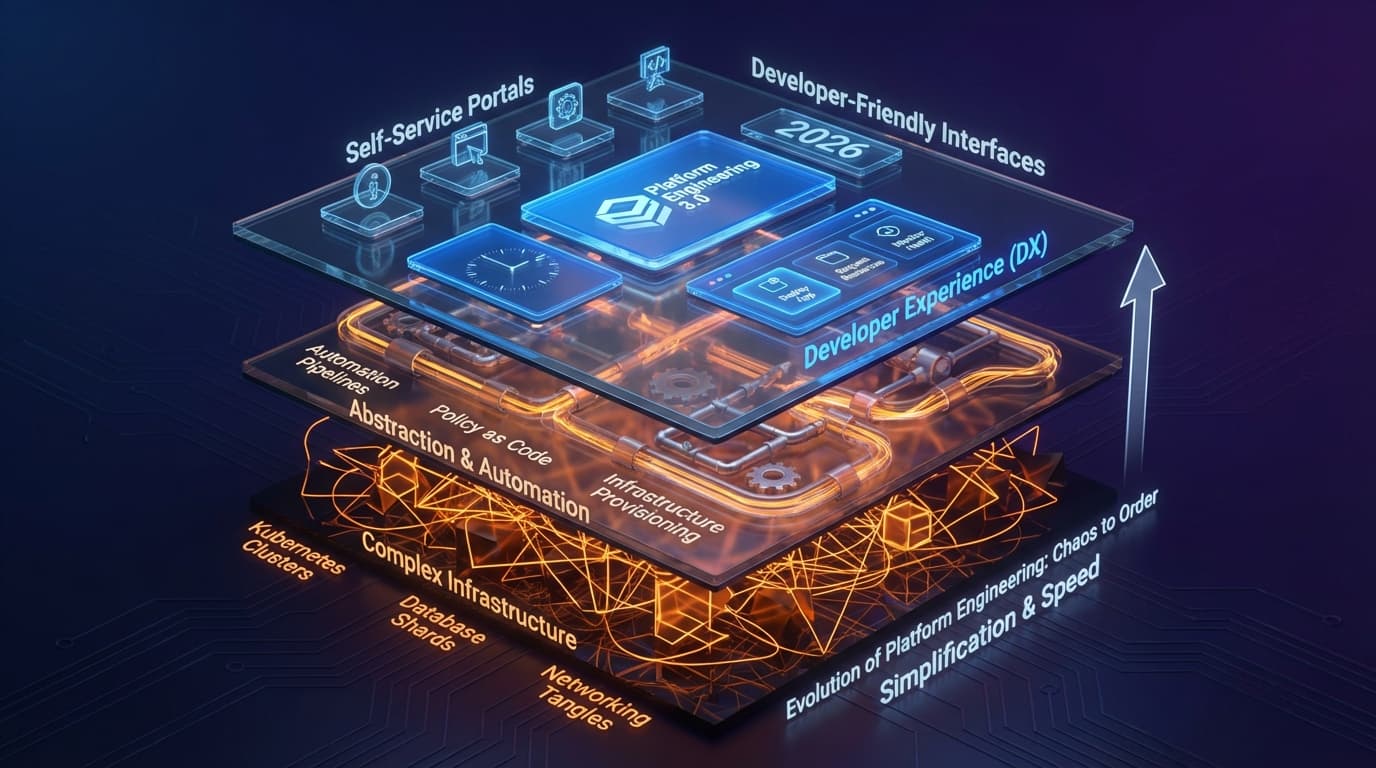
DevOps promised to break down silos between development and operations. It largely succeeded—but created a new problem: cognitive overload. Developers now manage Kubernetes clusters, CI/CD pipelines, observability stacks, and security tools alongside writing code. Platform Engineering offers a better way.
The DevOps Paradox
DevOps aimed to give developers more ownership and faster feedback. Instead, many organizations accidentally gave developers more things to manage. The average developer now needs to understand 10+ tools just to deploy a simple application.
The result? Slower delivery, frustrated engineers, and inconsistent practices across teams.
What Is Platform Engineering?
Platform Engineering is about building Internal Developer Platforms (IDPs) that abstract infrastructure complexity. Instead of developers wrestling with Terraform, Kubernetes, and observability tools directly, they interact with a curated, self-service platform.
Think of it as building a paved road instead of asking every driver to navigate off-road terrain.
The Core Principles
1. Self-Service by Default
Developers should be able to provision environments, deploy applications, and access logs without filing tickets or waiting for other teams. The platform provides guardrails, not gates.
2. Golden Paths, Not Mandates
Offer well-supported, recommended ways to do things. Teams can deviate when needed, but the golden path should be so easy that most won't want to.
3. Platform as Product
Treat internal developers as customers. Conduct user research. Iterate based on feedback. Measure adoption and satisfaction like any product team would.
4. Declarative Over Imperative
Developers describe what they want (a database, an API endpoint, a queue), not how to create it. The platform handles the implementation details.
What Does a Platform Look Like?
A modern Internal Developer Platform typically includes:
- Service catalog: Pre-configured templates for common workloads
- Self-service provisioning: Create environments with a click or API call
- Built-in observability: Logging, metrics, and tracing without configuration
- Security by default: Secrets management, network policies, compliance controls
- Documentation portal: Up-to-date guides integrated with the platform
Building vs Buying
You can build your platform on open-source tools like Backstage, Kratix, or Crossplane. Or you can adopt commercial platforms. The right choice depends on your team size, complexity, and engineering capacity.
Our recommendation: Start with a thin platform that solves your biggest pain points, then expand based on demand.
Measuring Success
Track these metrics to evaluate your platform:
- Time to first deployment: How quickly can a new developer ship code?
- Lead time for changes: From commit to production
- Platform adoption: What percentage of teams use the golden paths?
- Developer satisfaction: Regular surveys and NPS scores
- Cognitive load: How many tools does a developer need to know?
Getting Started
Platform Engineering isn't about buying a tool—it's about changing how you think about developer productivity. Start by identifying your developers' biggest friction points, then build (or buy) solutions that eliminate them.
Want to explore Platform Engineering for your organization? Let's discuss your current DevOps challenges and design a platform strategy.