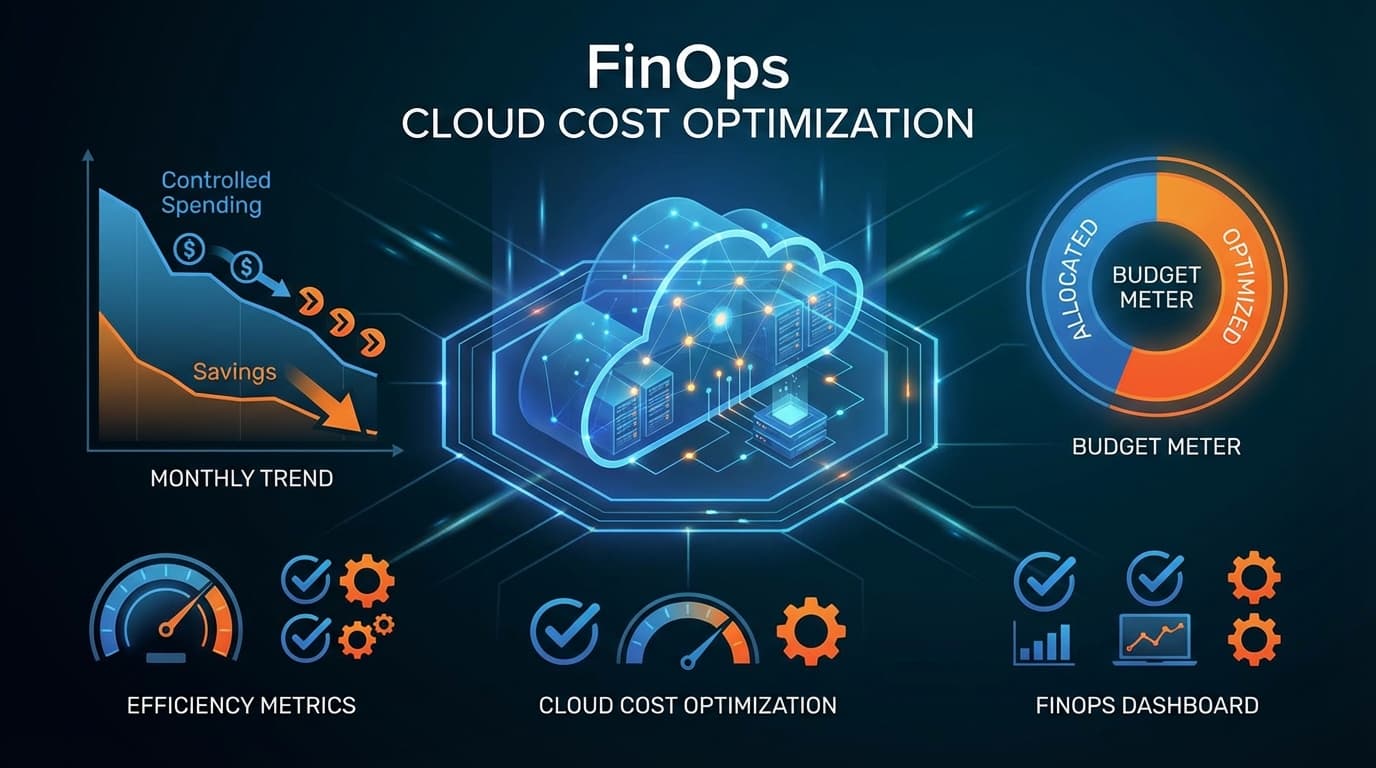
Your CFO just forwarded the latest cloud bill with a terse "Can you explain this?" The number is 40% higher than last quarter, and you're not entirely sure why. Sound familiar? You're not alone—cloud cost overruns are epidemic, but FinOps offers a way out.
What Is FinOps?
FinOps—short for Financial Operations—is a cultural practice and discipline that brings financial accountability to cloud spending. It combines people, processes, and tools to ensure you get maximum business value from every cloud dollar.
Unlike traditional IT budgeting, FinOps embraces the variable cost model of cloud and focuses on optimizing spend in real-time, not just forecasting annually.
The Three Pillars of FinOps
1. Inform: Visibility and Allocation
You can't optimize what you can't see. The first pillar is about creating transparency:
- Tag every resource with cost center, project, and environment
- Implement showback reports so teams see their actual consumption
- Create dashboards that surface anomalies immediately
- Track unit economics—cost per transaction, per user, per feature
2. Optimize: Rate and Usage Reduction
With visibility in place, attack costs from two angles:
- Rate optimization: Reserved instances, savings plans, spot instances, committed use discounts
- Usage optimization: Right-sizing, scheduling, eliminating waste, architectural efficiency
Most organizations can reduce cloud spend 20-30% through basic optimization alone.
3. Operate: Governance and Continuous Improvement
Cost optimization isn't a one-time project—it's an ongoing discipline:
- Establish policies and guardrails for cloud provisioning
- Create feedback loops between finance and engineering
- Regular optimization reviews and recommendations
- Anomaly detection and automated responses
Quick Wins to Start Today
While building a full FinOps practice takes time, these actions deliver immediate savings:
- Delete unused resources: Unattached volumes, old snapshots, idle load balancers
- Right-size over-provisioned instances: Most VMs run at 20-30% utilization
- Schedule non-production environments: Turn off dev/test outside business hours
- Review data transfer costs: Often the biggest surprise on the bill
- Audit storage tiers: Move infrequently accessed data to cheaper storage classes
Building Your FinOps Team
Successful FinOps requires cross-functional collaboration:
- FinOps Lead: Owns the practice, reports to both IT and Finance
- Engineering Champions: Implement optimizations within their teams
- Finance Partner: Translates technical metrics into business language
- Executive Sponsor: Ensures organizational commitment
FinOps Tools and Platforms
You can start with native cloud tools (AWS Cost Explorer, Azure Cost Management), but as you mature, consider:
- Multi-cloud cost management platforms for unified visibility
- Automated optimization tools that implement recommendations
- Anomaly detection systems that alert on unusual spending
Measuring Success
Track these metrics to gauge your FinOps maturity:
- Cost per unit: Transaction, user, or business metric
- Coverage ratio: Percentage of spend covered by commitments
- Waste percentage: Idle and unused resources
- Forecast accuracy: Predicted vs. actual spend
Start Your FinOps Journey
Cloud cost management doesn't have to be reactive. With the right approach, you can predict costs, optimize spending, and align cloud investment with business value. Ready to take control of your cloud costs? Let's build your FinOps capability together.